


How We Stack Multiple Edges
Portfolio Armor applies multiple edges to each opportunity in pursuit of superior returns. Candidates come from Portfolio Armor’s Top Names, our Multibaggers X list, and proprietary screens. We then examine the company, catalysts, technicals, current exposure, and the options market before deciding whether a name belongs in an alert.
For each selected security, we choose the structure that best expresses the thesis. That may be a multileg options trade with defined risk and asymmetric upside, or shares when the stock or its options make that the better fit. For options trades, we price the complete order with three models and compare those values with the live market to set an entry limit that keeps us from overpaying.
We begin with the end in mind by setting exit orders and review points suited to the trade. We monitor each position and alert subscribers when we adjust the plan. Every completed trade, winner or loser, enters the same public record.
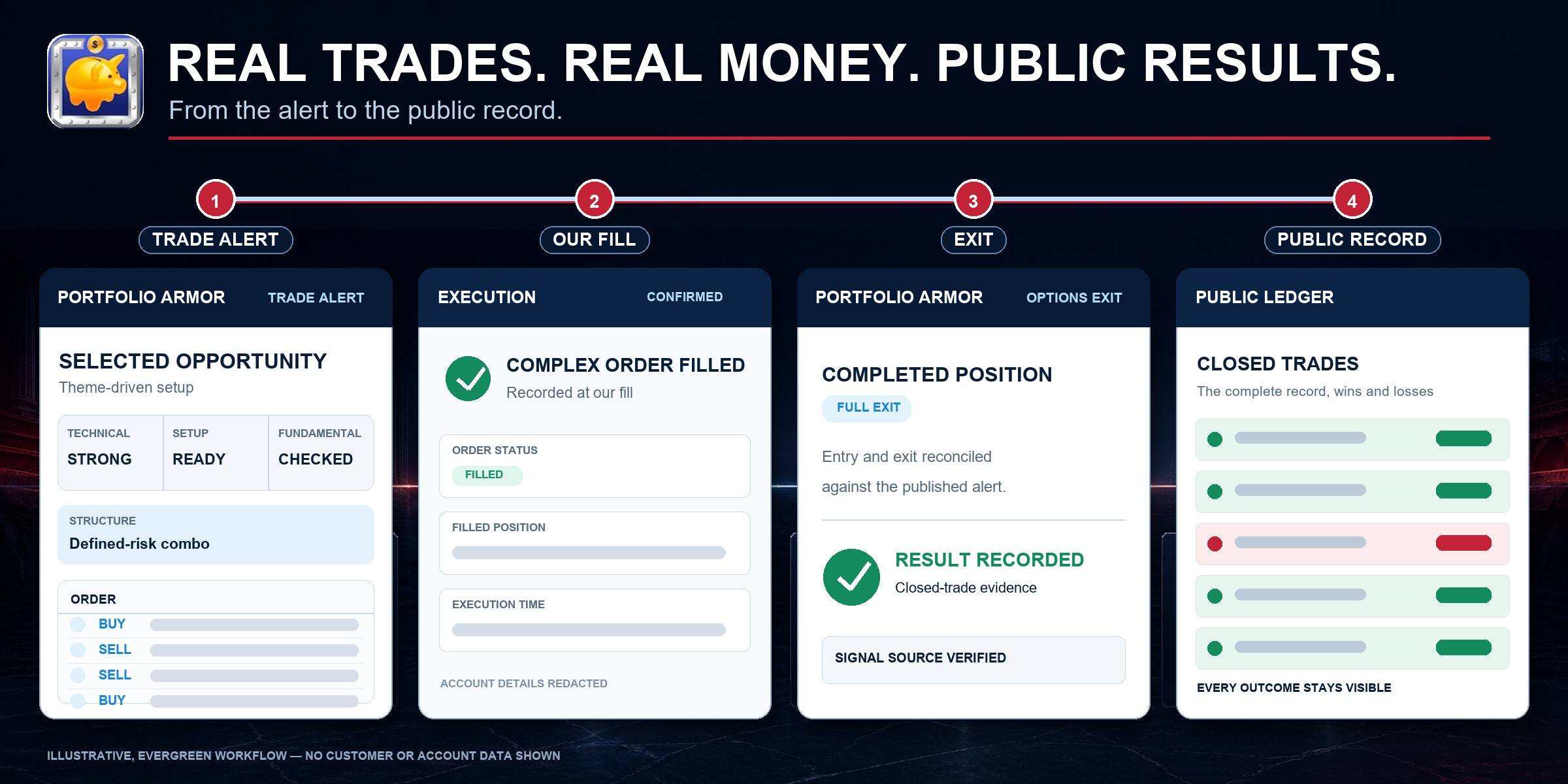
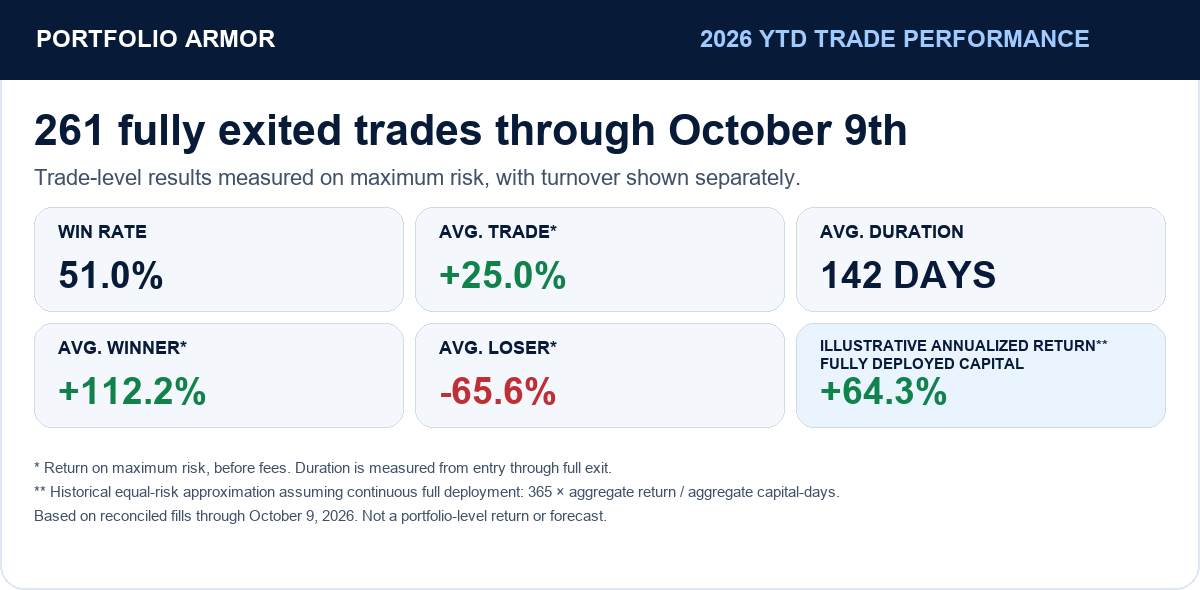
See our Trade Exits spreadsheet, where we publicly track the results of every trade.
What An Alert Gives You
A Portfolio Armor trade alert turns an investment idea into an actionable order with a price limit and a plan for managing the position.
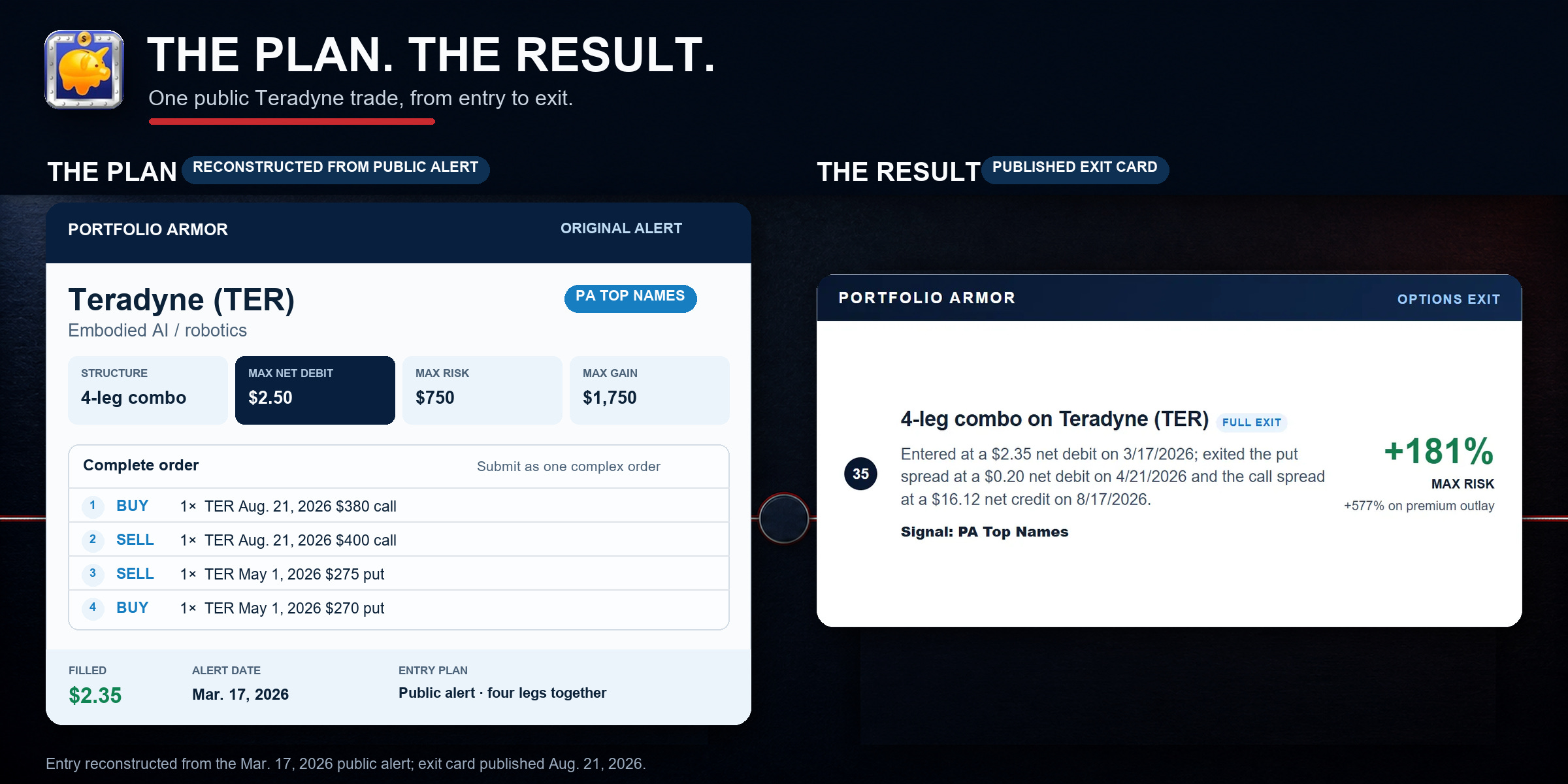
The card identifies the company and ticker, the source of the idea, the complete options structure, every action and contract, our entry limit, and the maximum gain and loss when they’re defined. We enter multileg structures as one complex order at one net price.
The alert then explains why the opportunity exists, how the structure fits the thesis and catalyst timeline, and what we plan to do after a fill. Its Exiting These Trades section gives the initial exit orders or the process we’ll use to set them. See how our alerts work, including how to read the cards, enter a complex order, distinguish a proposed trade from a fill, and follow later adjustments.
Portfolio Armor Trade Alerts Explained

How to enter, follow, and exit the options trades in our alerts.
Our Money Is In The Trade
We place the trades we publish with our own money. That aligns the alert with the same questions a subscriber faces: Is the setup strong enough? Is the structure worth its maximum risk? Is the options market offering a fair price? And what will we do if the trade moves for—or against—us?
The published limit isn’t a hypothetical midpoint. Before an alert goes out, we price the complete structure using Black–Scholes, Bjerksund–Stensland, and a Cox–Ross–Rubinstein binomial model, then compare those values with the live options market. We start with a more favorable order and won’t chase beyond the published limit.
That means some orders don’t fill. We prefer a missed trade to an undisciplined entry, and we don’t count an unfilled order as a position.
The Wins And Losses Stay Public
Each week, our Exits post documents that week’s partial and completed exits. Each exit card shows the entry, the exit, the signal that produced the idea, and the result. Clicking the card takes readers back to the original alert, while the public ledger preserves the broader record.
We publish the losses alongside the winners. We also discuss mistakes when they expose a weakness in the process. After one subscriber sold a Robinhood Markets call for $25 while we eventually sold the same contract for $1.25, we documented what went wrong.

We then added a catalyst-window rule designed to reduce the chance of repeating it. Transparency lets readers see what actually happened and judge whether the process is improving.
How We Apply Those Edges
Our ideas can come from Portfolio Armor’s Top Names—a daily quantitative ranking of securities by estimated six-month return potential—investors whose records we track, or specialized technical and fundamental screens. Every candidate still has to earn its way into an alert.
Before we publish a bullish trade, we review the company’s current business and catalysts, assess the stock’s intermediate trend, check its technical and fundamental ratings, examine existing exposure, and evaluate the options market. We then choose the trade structure that best fits the opportunity.
We price every options leg and the complete package before defining the maximum entry price and risk. After a fill, we use preset exits, catalyst reviews, and time-to-expiration rules to manage the position. We alert subscribers when we revise the exit plan, and the result ultimately enters the same public record.
Test-Drive A Full Trade Alert Free
You can see our public record and read the complete sample alert below at no charge. Become a free subscriber to receive our public posts in your inbox.
You’ll see the actual product: the security, complete structure, price limit, maximum risk, analysis, fill status, and exit plan. Then you can decide whether receiving our future alerts is worth paying for.

What Paid Subscribers Get
Paid subscribers receive our actionable trade alerts. They also receive fill updates, material trade-management changes, and our weekly Top Names. Weekly Exits posts remain free so anyone can continue checking the record.
Our objective is to find asymmetric opportunities, define the risk in advance, and remain patient about price. We only post trade ideas we find compelling enough to take ourselves.
If you want to receive our next actionable trade alert, become a paid subscriber.
Options involve substantial risk, including the possible loss of the full amount at risk. Each reader is responsible for deciding whether a trade and its maximum risk are suitable for him.