


The Next Course Correction
Earlier this month, we wrote about making some changes based on subscriber feedback.

The changes we introduced then made our alerts easier to understand and enter. A few sharp subscriber questions this weekend exposed the next place to improve: how we manage uncapped options after their short legs are gone.
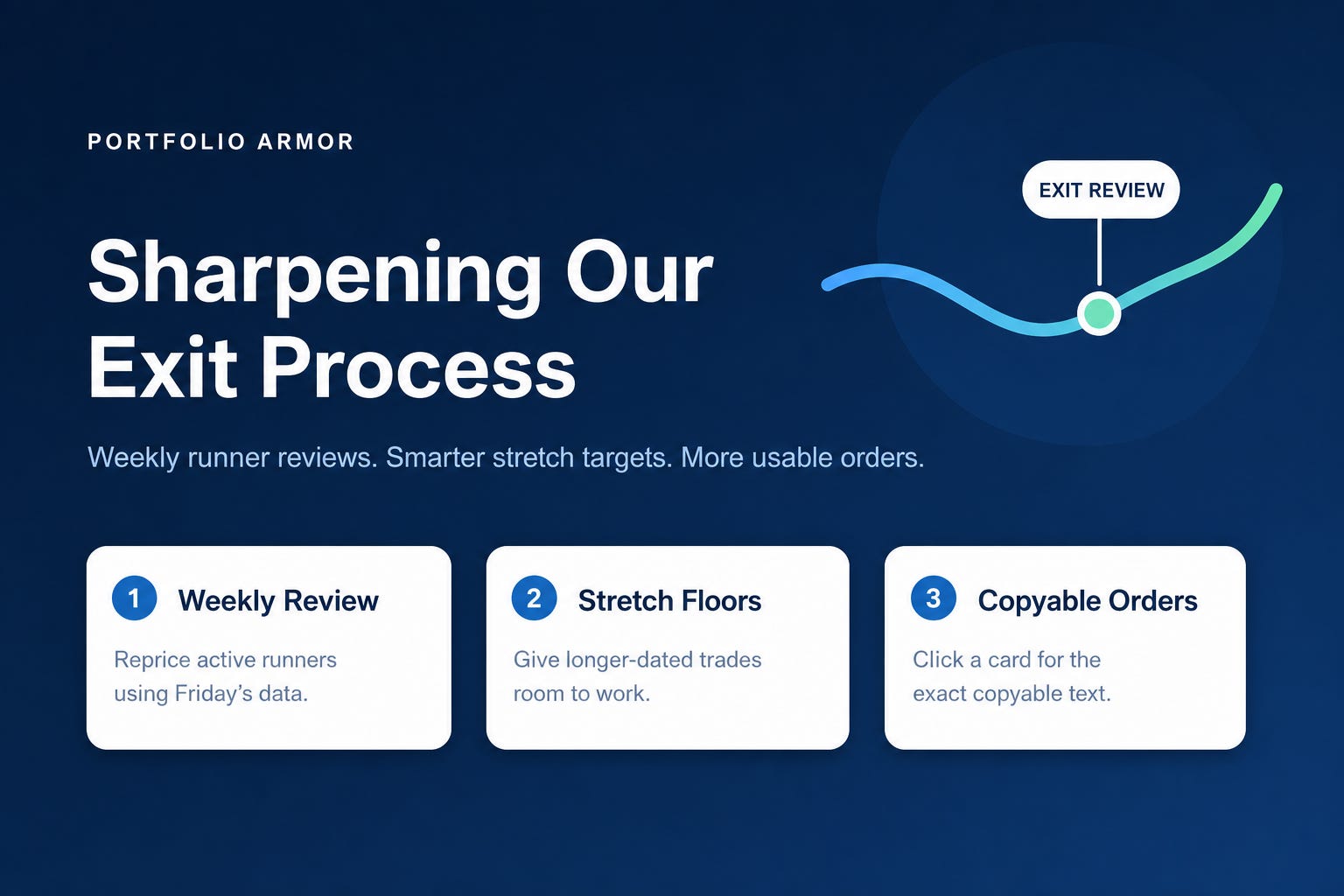
We made three changes.
How The Runner Method Works
A runner, in our terminology is a call or a put option that we’re free to sell, i.e., there’s no short option leg preventing us from doing so. Our runner method turns that open-ended upside into a disciplined exit target instead of guessing at a price.
The calculation starts with the current at-the-money straddle—the combined price of the call and put nearest the stock price—as the options market’s estimate of a plausible move between now and the option’s expiration. Our default assumes a stock move equal to 75% of that straddle: add it to the current share price for a call, or subtract it for a put. We then price the runner at that stock target with Black–Scholes, Bjerksund–Stensland, and the Cox–Ross–Rubinstein binomial model, using the most conservative model-derived value.
Known catalysts change the assumed move. Inside the 30 days before a scheduled—or reasonably expected—material catalyst, we use 60% of the at-the-money straddle instead of 75%. With 30 days or less and no catalyst ahead, a failed runner order can step down to a target based on 50% of the straddle. We explained the reasoning in our recent HOOD post.
A Profit Floor For Longer-Dated Runners
That process works well as expiration gets close. With several months left, though, its calculated option price can be low enough to lock in a loss before the trade has had time to work.
Next-month runners with no meaningful catalyst before expiration will continue to use the runner-method value, even when that would close a trade at a loss. For an option expiring two months out, we’ll now use the higher of the runner-method target or a stretch target that would give the whole trade a 15% profit on maximum risk. We’ll add five percentage points for each additional month: 20% three months out, 25% four months out, and so on. We’ll recalculate the floor as expiration approaches, so it steps down with time.
The same framework applies to uncapped puts in bearish trades.
A Weekly Runner Review
Increased use of AI enables us to track and calculate runner targets more frequently. We’ve got a relatively new internal spreadsheet tracking all of our trade entries, with notes about their respective catalysts, etc. We also have an AI watchdog tracking that sheet and reminding us as catalysts and other milestones approach. From now on, we’ll review every active runner each weekend using Friday’s stock price, actual implied volatility, time to expiration, upcoming catalysts, and the economics of the original trade.
When a review produces an actionable change, we’ll let paid subscribers know in a weekly Runner Review. During options-expiration week, we’ll fold those updates into our monthly OpEx review instead of sending a separate post.
Recalculating our runner targets every week should make us more likely to exit winning positions before they surrender substantial gains, which will likely improve our returns over time.
Cards Linked To Copyable Text
Our new trade cards made complex orders easier to read. Subscribers asked for one more improvement: copyable order text.
From now on, clicking an entry or exit-instructions card will open a dedicated page with the complete order in the compact text format we used before we introduced cards. The card stays clean and visual; the copyable text is one click away if you need it.

You can see how every part of the card works on our Trade Alerts Explained page.
The Record We’re Trying To Improve
We added a running performance tracker in our earlier course correction. Here is the latest update through Friday, August 21:
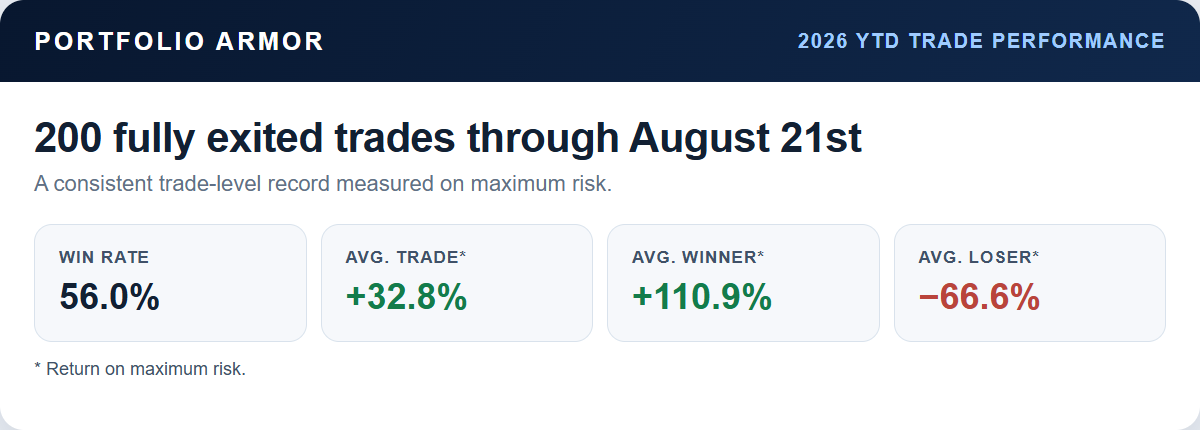
The tracker measures every completed trade on the same denominator—return on maximum risk—and the underlying record remains available in our public trade ledger.
Built With Subscribers
Several of these improvements started with subscribers stress-testing our process in the comments. That’s exactly what we want. A strong trading process should keep improving: absorbing new evidence, closing gaps, and becoming easier to follow.
The first weekly Runner Review comes this weekend. The goal is simple: clearer orders at entry, and more chances to bank gains before the market takes them back.
Would it make sense to review put spreads as well? For example, the VPG Nov 20 $105/$110 put spread is deeply ITM (VPG is now at $64.86) and the short put might be at risk of assignment. Is it a candidate for adjusting the exit order accordingly, or do you think it still has sufficient time to recover?