



The Bill Came From A Lab
The latest AI-biotech demonstration came with a laboratory bill. That’s the part of the story we like as investors.
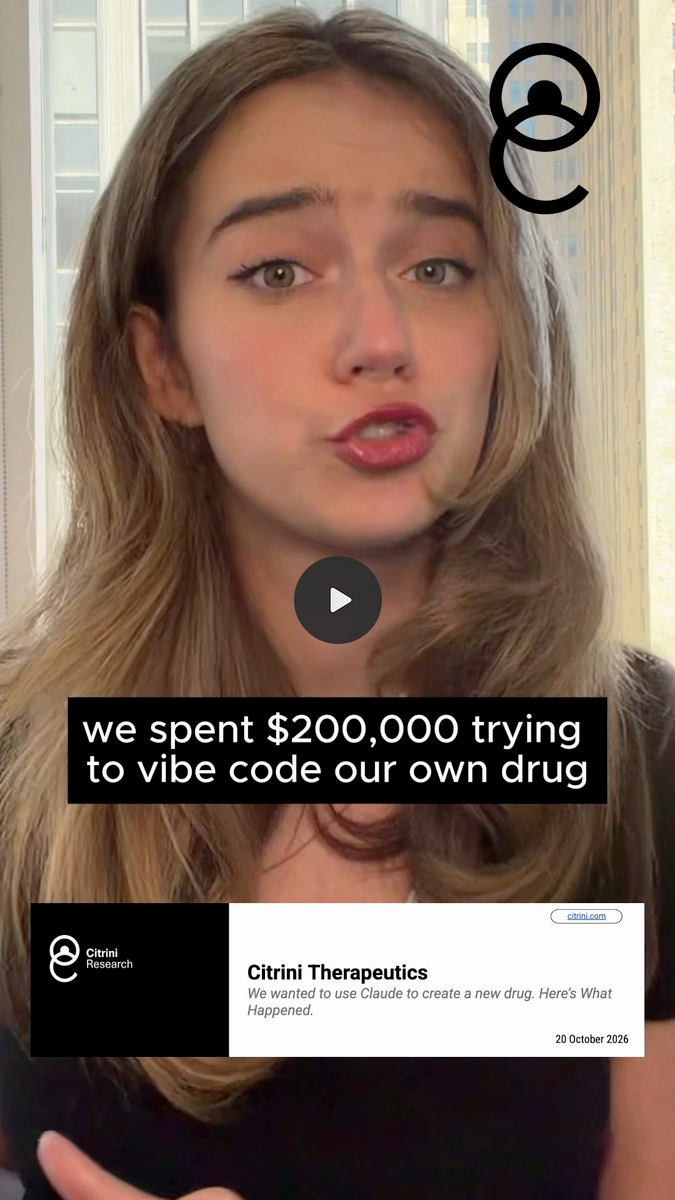
On October 20th, investment-research firm Citrini Research published its three-month experiment with an internal Anthropic model: could a group of nonexperts use Claude to help design a potential scorpion antivenom? Twist Bioscience (TWST), a provider of synthetic DNA and protein services, helped turn the computer’s designs into material scientists could test.
Citrini’s Eva Roytburg introduces the experiment in this video:


Promising Designs Need Physical Proof
Anthropic’s research report describes 17 qualifying binders among 211 designs tested. A binder is a protein that attaches to a target. The researchers hadn’t tested whether these designs actually neutralize a toxin in cells or protect a living animal. That distinction separates a promising design result from a treatment.
Nathan C. Frey, Anthropic’s head of drug-discovery and development research, lays out both the achievement and the work still ahead:

The lab work was substantial. Citrini reports a combined bill of just under $150,000 paid to Twist and Adaptyv Bio for synthesis, protein production and testing.
More Ideas Can Mean More Lab Work
The investment question is who earns revenue as researchers generate and test more ideas. Twist already performed physical work in this experiment. Our thesis is that cheaper molecular design can expand demand for the synthesis and testing needed to find out which designs work.
Novartis CEO Vas Narasimhan made the underlying distinction in his October 20th essay: AI can reduce information and operational delays, while experiments and clinical development still impose biological constraints. Generating more candidates also raises the value of choosing and testing them well.
Investor Kevin Mak read the same evidence as a reason the market’s biotech-disruption trade could reverse. We’re focused on the supplier side: AI’s progress can create customers for laboratory services while drug developers continue the difficult work of proving safety and efficacy.
For Twist shareholders, the evidence to watch is commercial: AI-related order growth, repeat customers and the margins those orders produce.
Two Profitable Trades In Twist
We’ve already traded Twist Bioscience profitably. Our two most recent entries were on February 27th and July 15th, and both have since closed. Here’s the original February 27th entry:

Our actual fill was $2.25, putting the original maximum risk at $725. After the staged exits, the trade finished on July 6th with a 104.1% return on that risk:

We returned to the name with this July 15th entry:

The trade filled at $4.50 and finished on October 6th with a 132.1% return on its original $950 maximum risk:

Our Next Trade
Twist Bioscience ranked fourth among Portfolio Armor’s Top Names at the October 20th close. We’re returning to the name today with a different options structure.
The thesis is that more AI-designed molecules will generate paid orders for physical synthesis and testing. Below, we lay out the trade and our exit plan.
Our Next AI-Biology Trade
To see how our stock selection and options approach fit together, start here:

Today’s Top Names Trade
Theme: AI-designed molecules drive synthesis demand.
RSI: 44; Chartmill Technical Rating: 8; Setup Rating: 5; Fundamental Rating: 4.