



The Fight Over Nvidia
The Democrats won both houses of Congress this month. Then Donald Trump publicly urged Nvidia’s board to bring back Jensen Huang, and the company announced his return on Monday. The same president who ordered federal agencies to speed up data center permitting had put his weight behind the man who supplies much of the hardware going into those data centers. Midterm results · Nvidia filing · Trump’s push to reinstate Huang · Permitting order
California Attorney General Rob Bonta had already subpoenaed Nvidia, seeking to learn whether advanced chips or confidential information reached China and whether the company misled investors. Sen. Elizabeth Warren called Huang’s return “reckless,” demanded that the White House explain its role, and urged Congress to pass bipartisan chip export controls. Bonta’s subpoena announcement · Warren’s post
In response to Warren, Glenn Greenwald argued that Democrats were feigning outrage over Huang. He pointed to former Rep. Eric Swalwell, who told the FBI he’d had sex with Christine Fang, a suspected Chinese intelligence operative, according to interview summaries declassified in August. ABC7’s report on the files


Swalwell’s ties to Fang were already public in 2021 when House Democrats voted to shelve a resolution removing him from the Intelligence Committee. In 2023, Democratic leader Hakeem Jeffries sought to put Swalwell back on the panel, and Republican Speaker Kevin McCarthy blocked the appointment. That history makes the Democrats’ urgency over Huang look selective. 2021 House vote · Jeffries’s letter · McCarthy’s decision
On Tuesday, Chuck Schumer accused Huang of violating U.S. export controls and called for tighter restrictions on chip sales to China. That was the post that prompted Bloomberg’s Joe Weisenthal to argue that Democrats could spend the next two years taking on AI companies at little political cost. I replied that it depended on how widely the benefits of AI spread in those two years. Schumer’s post · My reply


You can see why the politics favor the critics today. If your town is being asked to make room on its grid for a huge new data center, you have a concrete reason to pay attention. Massachusetts Democrat Ayanna Pressley used a post-election town hall to call for a federal moratorium on data centers. Pennsylvania’s Democratic governor, Josh Shapiro, helped land Amazon’s planned $20 billion buildout and later imposed rules to protect households from higher power costs and give communities more say over where data centers go. Pressley’s town hall · Shapiro’s data center remarks
The AI Future In A Music Video
In September, OpenAI published a proof it says settles one of the Millennium Prize Problems. Its model found a way for motion that starts out smooth in the equations for a fluid to break down in finite time. The Clay Mathematics Institute called the problem apparently settled and said it would follow its review process. That’s an extraordinary development. How many people will notice it in the course of a normal week? OpenAI’s proof announcement · Clay’s statement
Claudia, the AI singer in anabology’s “WHITEPILL,” has a more domestic vision. Claudia opens the song by singing that Skynet woke up folding socks. It goes on to imagine driverless rides through orchards and a world where people can work fewer hours and live well. Folding socks is the part I keep coming back to. Film and credits
What People Can See For Themselves
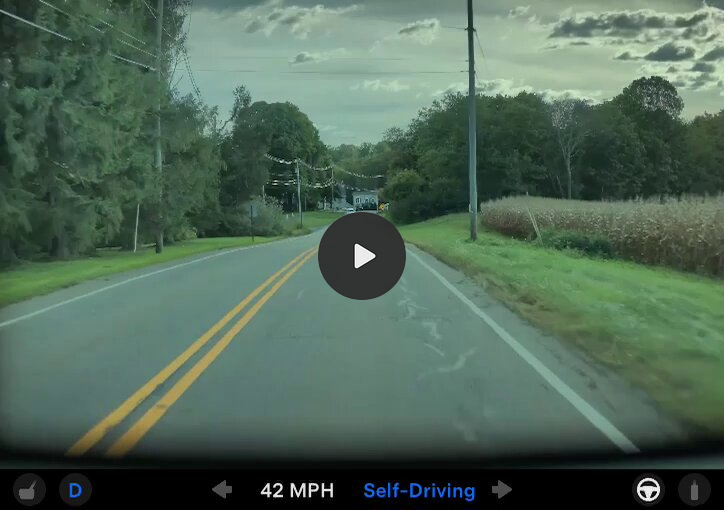
In September, I wrote about using Full Self-Driving (Supervised) in my Model Y. A young black bear ran across a rural New Jersey road in front of us, and the car slowed to avoid it. We asked Grok to pull the dashcam clip by voice. Tesla counted 1.74 million active subscriptions at the end of September, including upfront purchases. You still have to supervise the car. You can also take a friend for a ride and show them what it does. Trade Alert: Bear Witness · Tesla’s quarterly update

Tesla says production of its Optimus humanoid robot has begun in Fremont. Now imagine that by 2028, even if you can’t afford one, you know somebody who knows somebody with one. It folds their laundry, puts away the dishes and cleans up the living room. You visit on a Sunday and see it do the work while everybody else is outside. If enough people have a story like that, there’ll be a constituency for keeping the AI buildout going.
We’ve argued since the midterms that Trump should give Americans a financial stake in the buildout, including a way for ordinary savers to share in gains from federal investments. AI companies can do something of their own over the next two years. Put useful products in people’s hands at prices they can afford. If the main thing voters associate with AI in 2028 is higher power bills, Weisenthal’s bet looks good. If they can tell you what AI did for them last weekend, Democrats will have to reckon with voters who want more of it. What Trump Should Do Now · Give Americans A Stake In America
What We’re Trading Now
We’re bullish on AI for the long run. For the beaten-down AI stocks on our watchlist, we’re waiting for signs that buyers are coming back. Our recovery screens look for stocks that may have put in a bottom while the business case still holds up. How we look for a turn
Right now, those screens are pointing us toward biotech. That’s where we’re looking for trades in today’s alert.
If you’d like to see today’s setups and get a heads-up when we place them, subscribe to Portfolio Armor.
New to our alerts? Start Here explains how we choose trades, set entry limits, and plan exits.
