


What Just Happened
Overnight, the U.S. and Israel launched a large-scale coordinated attack on targets across Iran. According to early reporting, the first wave of strikes hit near the compound housing Iran’s Supreme Leader Ayatollah Ali Khamenei in central Tehran, with additional strikes on military, government, and intelligence sites around the country.(San Francisco Chronicle) Smoke has been visible over the capital and other cities, and Iranian media have reported explosions nationwide.
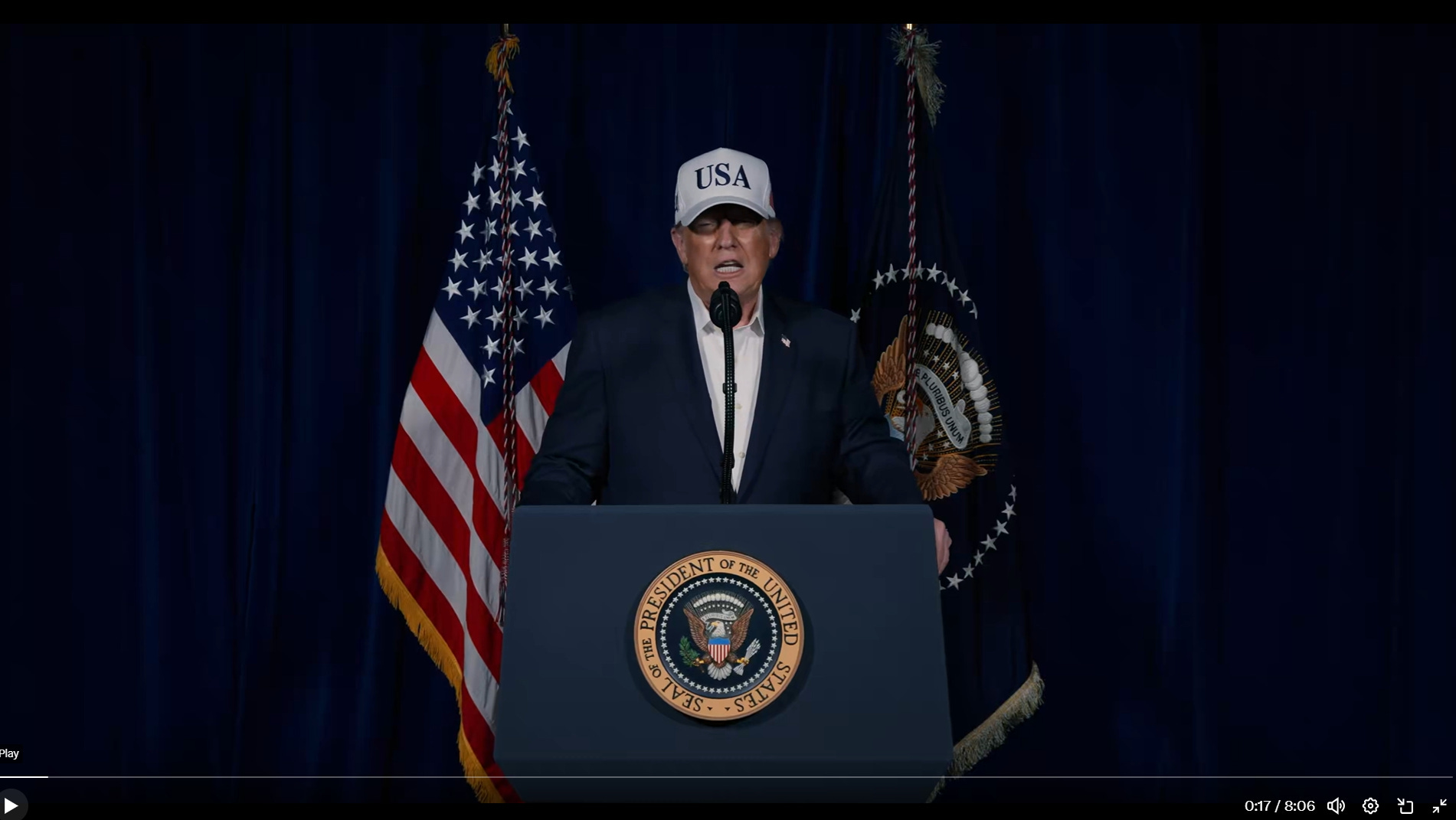
In a video address, President Trump said the U.S. had begun “major combat operations in Iran,” framing the campaign as a response to decades of Iranian attacks and proxy warfare.
https://x.com/realDonaldTrump/status/2027651077865157033?s=20
He urged Iranian civilians to seek shelter during the bombing and then “take over your government” when the strikes end—language that clearly points beyond a narrow strike on nuclear facilities toward an explicit bid to end the current regime.
Israel’s Prime Minister Netanyahu called the operation a move to “remove an existential threat” and said the joint strike would “create the conditions for the brave Iranian people to take their fate into their own hands.”(San Francisco Chronicle)
Iran’s Islamic Revolutionary Guard Corps, for its part, says it has launched a “first wave” of drones and missiles at Israel, with explosions reported as Israeli air defenses attempt to intercept incoming fire. Several Israeli hospitals have activated emergency protocols and moved patients into underground facilities.
The conflict is already radiating outward. Bahrain reports a missile attack aimed at the U.S. Navy’s 5th Fleet HQ; sirens and explosions have been heard in Kuwait and Qatar, home to major U.S. bases. Iraq and the UAE have closed their airspace, and U.S. embassies around the region are telling Americans to shelter in place.
https://x.com/Osinttechnical/status/2027677928062906449?s=20
In other words: this is not a “surgical” strike that the market can easily ignore. It’s a real war in a region that still matters a lot for energy, shipping, and global risk appetite.
The Best Time To Hedge A War Is Before It Starts
From an investor’s perspective, the ideal time to hedge a shock like this is before it happens—when volatility is cheap because most people have moved on to the next headline.
That’s what we did last week.
After Iran headlines faded and volatility dipped again, we published a trade alert walking through a specific call spread on the VIX as a hedge against Iran war risk.

As we normally do with call spreads, we:
Opened the trade when implied volatility on the structure looked attractive, and
Immediately set a good-’til-canceled (GTC) limit order to exit the spread at roughly 80% of its maximum possible gain.
That 80% rule of thumb has served us well in calmer conditions: it lets us monetize volatility spikes without getting greedy, while avoiding the “round-trip” where the VIX spikes and then collapses before you act.
This weekend is different. With a full-scale war starting over a Saturday night, we’re cancelling that GTC exit order so we can reassess the right exit level once we see how the market actually reacts on Monday. If equity volatility gaps higher and stays bid, we may be able to capture something much closer to 100% of the call spread’s maximum value.
The point of highlighting this isn’t to brag—it’s to underline the basic lesson: you want to be thinking about hedges when nobody else cares, not after the missiles are already in the air.
The Second-Best Time To Hedge
If you didn’t hedge last week, the second-best time is now, not after the next escalation headline.
On Monday, after the open dust settles a bit, you’ll be able to use our website or iPhone app to price out protection.

You plug in a ticker, a time horizon, and how much downside you’re willing to tolerate, and our system scans for the least expensive optimal hedges that will cap your loss at that level, using listed options on that name or on an appropriate proxy.
Realistically, hedges are likely to be more expensive on Monday than they were on Friday—this is exactly the kind of event volatility is supposed to price in. But “more expensive” doesn’t necessarily mean “unusable.” What our algorithm does is:
Compare many different put and collar structures,
Toss out anything that doesn’t actually give you the protection you asked for, and
Rank what’s left by cost so you can pick the cheapest hedge that meets your pain threshold.
Maybe you’ll decide that after a post-war spike, protection is too pricey to be worth it. But at least you’ll know that, instead of guessing.
Whipsaw Volatility, And Why We Use Hybrids
War headlines are landing on a market that was already whipsawing aggressively—especially in momentum names tied to AI, energy, and speculative biotech. That’s one reason we’ve leaned so hard into 4-leg hybrid structures that pair long, farther-dated calls with short, nearer-dated short calls and put spreads.
In our weekly Exits post yesterday, we walked through how that template has been working.

We took three full losses on near-dated put spreads that served as “floors” in front of binary events: Eos Energy Enterprises (EOSE -8.14%↓), Rocket Lab USA (RKLB 1.64%↑), and Baidu (BIDU -1.43%↓).
At the same time, we booked chunky gains on the income side—buying-to-close short calls in names like Personalis (PSNL 5.57%↑), KVH Industries (KVHI 0.84%↑), and uniQure (QURE -7.26%↓) and harvesting most of the value of our Opera (OPRA 3.63%↑) and Abivax (ABVX 1.21%↑) put spreads as volatility mean-reverted.
The idea is simple:
Use near-term short premium (calls and/or puts) to finance longer-dated upside exposure;
Let those short legs bleed toward zero in quiet periods;
Take advantage of spikes—either to take partial profits and remove upside caps cheaply, or to exit near-dated floors at a deep discount to max risk.
In a war-headline environment, that same logic still applies. If the market gaps down hard on Monday, we may see more opportunities to buy back short call legs or short put spreads at attractive prices—even as the long calls continue to give us convex exposure to our underlying themes.
Game Plan For Monday
So what do we do now?
First, we’ll see how the VIX and index futures digest the war over the weekend and into Monday’s open. For our existing VIX hedge, we’ll look to reset our exit target based on actual prices rather than a pre-war rule of thumb.
Second, we’ll spend the rest of the weekend doing what we always do:
Reviewing our usual sources of alpha, including our Top Names, which have more than doubled SPY’s return since late 2022 over 139 rolling six-month periods,
Scanning for stocks that fit both our macro themes (AI infrastructure, re-industrialization, energy, biotech) and our tighter entry criteria, and
Stress-testing options structures on those names to make sure we’re not overpaying for volatility in the new regime.
In practical terms, that likely means:
Staying selective about fresh risk—no “spray and pray” just because prices are moving;
Continuing to favor defined-risk, financed call structures where we can harvest rich front-month volatility while keeping the possibility of uncapped upside beyond it;
Being slightly more aggressive about demanding a discount on entries, given the added geopolitical uncertainty; and
Being very disciplined about exits on short legs, so we don’t let headline noise talk us into giving back premium we worked to collect.
If you’re already hedged, Monday may be a day to manage those hedges and look for opportunistic adds where the market overreacts. If you’re not hedged yet, Monday is your second chance—likely a more expensive one, but still better than waiting for the next escalation.
Either way, we’ll be in the same boat as our readers: navigating a world where missiles are flying, politicians are talking about regime change on video, and screens are flashing red and green. The difference is that we’ve spent years building tools and structures specifically for weeks like this.
We’ll use them.
Any plans to sell the March 18 VIX calls?