


Avoiding The Mistakes Of 1991
In a post on Friday, I expressed concern that the Trump administration might repeat the mistakes of the first Gulf War in 1991 fumble the peace talks in a similar way.

So far, that hasn’t happened.
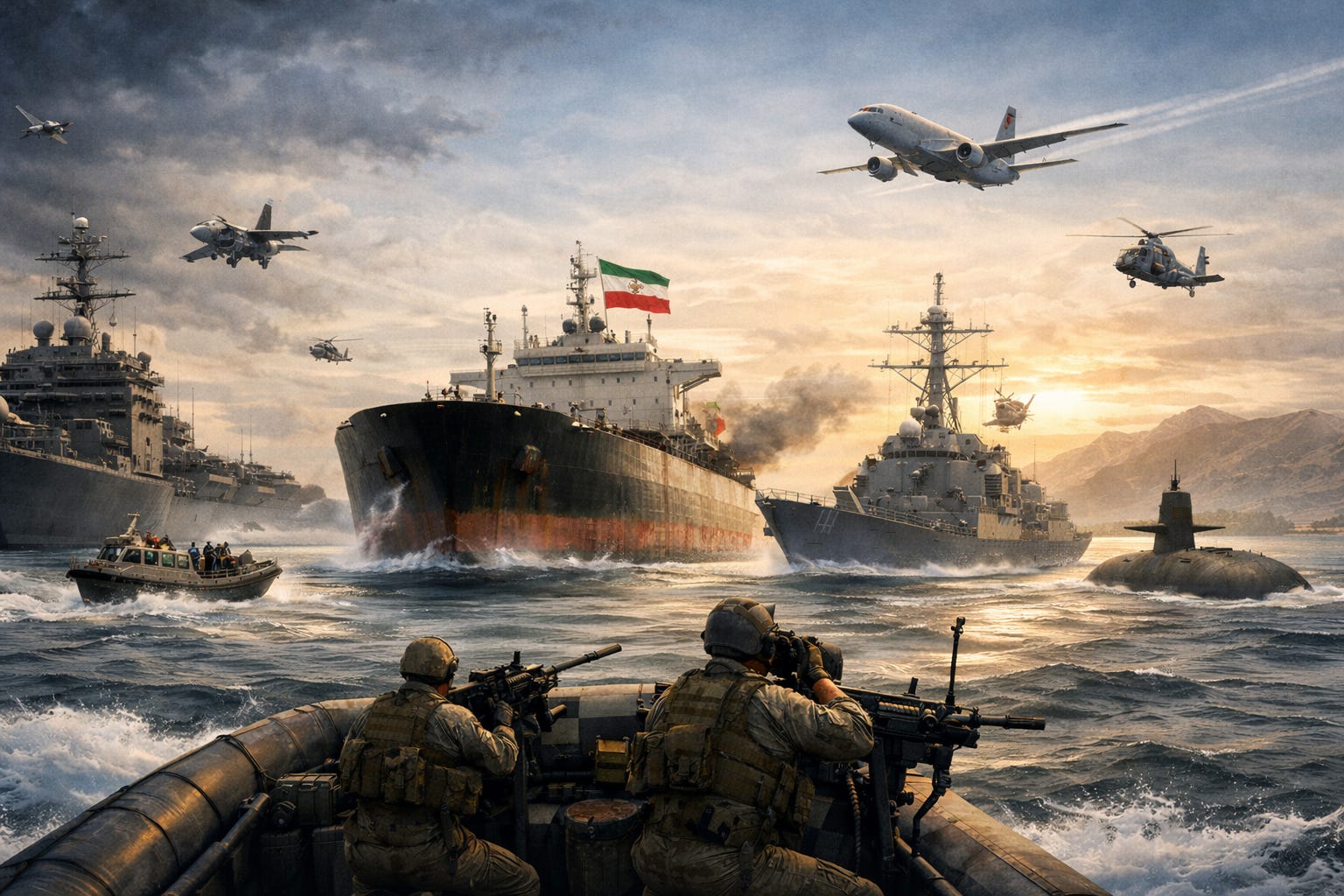
The talks in Islamabad didn’t produce a final agreement, but they also did not end with Washington giving Tehran some cosmetic off-ramp that would leave the underlying problem intact. Instead, after roughly 21 hours of negotiations, the Trump administration moved directly to another lever I argued for on Friday: blockading Iranian oil exports and maritime trade. CENTCOM said Sunday that the blockade would begin Monday at 10 a.m. ET, and that it would apply to vessels entering or leaving Iranian ports while still allowing traffic bound for non-Iranian ports to transit the Strait of Hormuz.
That is a meaningful distinction. This is not a general closure of the Gulf. It is targeted pressure on Iran.
“The Talks Failed” Is Too Strong
A lot of the commentary over the weekend treated Islamabad as if it proved diplomacy was dead. That seems premature.
The United States and Iran haven’t had diplomatic relations in 47 years. These were high-level talks held after more than a month of open war. No one should have expected all of that to be patched up in a single sitting. What’s more revealing is that the talks reportedly lasted about 21 hours. That suggests there was enough overlap to keep going for a long time, which in turn suggests there was likely agreement on a number of points, even if not yet on the biggest ones.
In their public posts following the negotiations, President Trump and Iranian President Masoud Pezeshkian made some conciliatory comments. For example, President Trump wrote this, on Truth Social:
My three Representatives, as all of this time went by, became, not surprisingly, very friendly and respectful of Iran’s Representatives, Mohammad-Bagher Ghalibaf, Abbas Araghchi, and Ali Bagheri
That’s not what final diplomatic collapse sounds like.
Washington Has Moved To The Next Lever
More important than the atmospherics is the substance. Washington has now moved to “Plan B.”
In Friday’s post, I argued that if China and Russia could not deliver enough pressure on Tehran, the U.S. still had another lever to pull before returning to major bombing or ground-force escalation: go after Iranian oil exports directly. That is now what the administration is doing.
This matters because it gives Washington real leverage without immediately resuming the air war.
Why The Blockade Is Serious Pressure
Former Treasury-OFAC sanctions official Miad Maleki argued over the weekend that a U.S. naval blockade of Iran’s Gulf trade would impose roughly $435 million a day in combined economic damage, or about $13 billion a month, through lost exports and disrupted imports.

He also argued that Iran’s alternative routes outside the Gulf could replace less than 10% of the lost throughput, and that storage constraints could force shut-ins quickly enough to risk lasting damage to oil production capacity.
Why This Still Likely Ends Soon
If Trump initially refrains from launching a new round of strikes while the blockade begins to bite, the dynamic changes in Washington’s favor. If Iran accepts the pressure and keeps talking, the conflict can move toward a negotiated settlement. If Iran instead tries to break the blockade by attacking an American ship, then it will be Iran, not the United States, that has plainly reinitiated the war after the ceasefire window and after direct talks. That is a much worse position for Tehran politically and diplomatically.
Pakistan’s Moves Matter Too
There was another weekend development that should get Tehran’s attention.
Pakistan hosted the talks in Islamabad, but Saudi Arabia also said over the weekend that Pakistan had sent fighter jets and support aircraft to King Abdulaziz Air Base in the kingdom’s Eastern Province under the September 2025 mutual-defense pact.
That doesn’t mean Pakistan is spoiling for a wider war. It does mean Iran is being reminded that if the conflict flares up again, especially if Gulf infrastructure is hit again, it may be facing a wider set of opponents than just the U.S. and Israel.
That’s not a trivial signal. Pakistan’s role as host of the talks makes the military move more striking, not less.
Don’t Count On China To Break The Blockade
Some Iran supporters still hold out hope that China will somehow break the blockade.
China certainly likes Iranian oil. But China also has a much larger stake in the principle that commercial shipping should move through international waters and maritime chokepoints without being extorted, tolled, or arbitrarily throttled by regional powers. China’s economy depends heavily on large-scale seaborne trade, and its persistent trade surplus depends on the continued smooth movement of commercial shipping. That makes direct China challenging the U.S. Navy in support of Iran’s quest to toll the Strait of Hormuz seem unlikely.
There Is Still A Huge Carrot Here
If Iran gives up its nuclear-weapons ambition, stops financing foreign militias, and stops threatening shipping in the Strait of Hormuz, the upside is full normalization with the United States, the lifting of sanctions, and the possibility of a real economic boom. Iran is a large, educated country with major resources, a strategic location, and obvious rebuilding needs. Under different political conditions, it could grow dramatically.
The U.S. doesn’t need every Iranian to agree to that future. It just needs someone in power who is willing to take the deal.
Investing Implications
From an investing perspective, nothing that happened over the weekend changed my view that this conflict will probably be over within the next month or so.
Before the first round of talks and before the blockade announcement, I already had two trades teed up for Monday. I still plan on sending out an alert on those trades later today.
My only change today is tactical. The negative market reaction to the blockade gives us an opportunity to lower our bid prices a bit and try to take advantage of weaker prices.